Coach Road Field, Battle
A vibrant hay meadow since time immemorial, Coach Road Field was traditionally farmed for three generations of the Rudman family.
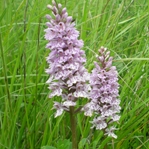
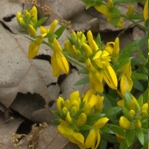
When the last generation - the Rudman brothers - retired in their eighties, the new (and current) owners talked to them to find out how they had managed the site. Since then that management has been replicated in order to enable its survival. Amongst the sweet vernal grass and beautiful quaking grass, the field is now awash with summer colour from swaths of oxeye daisy, common knapweed, common spotted-orchid and common bird’s-foot-trefoil, along with less often seen flowers like dyer’s greenweed. This diversity of plants provide a home to six-spot burnet moths and red-tailed bumblebees. Seed is taken every year to enhance or create more meadows on the estate.
Recipient Meadows
Species to spot
-
-
-
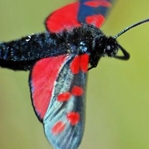
Six-spot burnet moth
Best time to see: June - Aug
Unlike many moths, the burnet moth flies during the day. Its caterpillars feed on Bird's-foot Trefoil whilst the adults feed on the nectar of knapweed, thistles and other grassland flowers. Image © Bob Coyle
-

Oxeye daisy
Best time to see: June - Aug.
Large and daisy-like, the oxeye tends to bloom around midsummer and in fact is called the Sunnwendbleaml - or 'solstice flower' - in Austria. Before the 16th century it was known as the 'Moon Daisy' or 'Dog Daisy'.
-
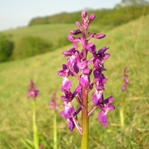
Early purple orchid
Best time to see: April - June
Often arriving with the bluebell, this early orchid has a wonderful scent, not dissimilar to lily-of-the-valley and is the "long purple" of Ophelia's garland, referred to by Gertrude in Shakespeare's Hamlet.
Memories
"I have known the site for 43 years and been responsible for its management through out that time. It is very interesting to see how the field character changes with the seasons favouring different suits of species year on year."
- Keith Datchler OBE, Coach Road Field Manager
Your pictures
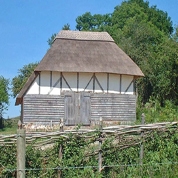
Bunces Barn at the Beech Estate... the perfect spot for a picnic
Owned by
Harry & Sophie Wills