Feoch Meadows, Barrhill
"I remember visiting as a very novice ecologist and being blown away ... The main orchid area remains as stunning as ever."
- Alan Anderson, Scottish Wildlife Trust
A botanically-rich mosaic of dry and wet grassland, fen meadow and mire Feoch Meadows is home to ten species of orchid, including greater butterfly, frog and small white, and is a key site for butterflies in south-west Scotland. Particularly abundant is the fragrant orchid whose sweet scent lives up to its name (see "Species to spot" below). The meadows are named after the Feoch Burn which runs through the site. It is upon its banks that most of the orchids are found.
How to get there
Feoch Meadows lies approximately 1.5 miles east of Barrhill village, up a farm track off the A714 Girvan to Newton Stewart road. Turn left into the Killantringan Farm track and take the left fork up to the car-park at the entrance gate. To get onto the meadow enter through the gate or over the stile from the car-park. There are no paths but stiles are provided at various locations.
Species to spot
-
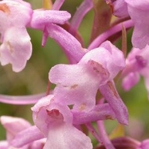
Fragrant orchid
Best time to see: June - July
Usually pink but can vary from purple to white. The fragrant orchid lives up to its name by producing a sweet, orangey smell that is particularly strong in the evening. Image © Philip Precey
-
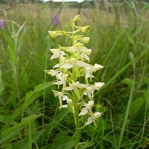
Greater butterfly orchid
Best time to see: June - July
Despite its name this dainty flower is largely pollinated by moths, attracted by a vanilla scent that grows stronger at night. The lesser butterfly orchid looks very alike - the main difference the size and position of its pollen sacs.
-

Small pearl-bordered fritillary
Best time to see: June - July
Preferring damp meadows, this butterfly flies low to the ground frequently skipping from flower to flower to drink nectar. In recent years it has declined dramatically in England. Image © Hugh Venables/CC BY-SA
-
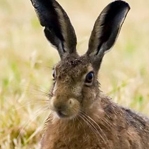
Brown hare
Best time to see: All year
Often seen bounding across fields using their powerful hind legs to propel them forwards in a zigzag pattern. In early spring, Brown Hares are at their most visible as the breeding season encourages fighting or 'boxing'. Image © Damian Waters/drumimages.co.uk
-
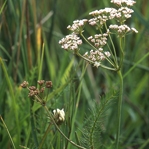
Whorled caraway
This frothy flower derives its name from its leaves which form a circlet - or 'whorl' - around the base of its stem. Although its related to the spice Caraway, it has no culinary or medicinal use. Image © Plantlife/Bob Gibbons
-
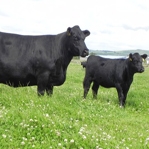
Aberdeen Angus
The Native type of Angus is now a rare breed, short legged, hardy and docile, it was sent all over the world to improve beef production. Today, the more commonly found Aberdeen Angus is a large, impressive animal well known for the quality of its beef.
Image by G. Soutar