Lurand, North Ronaldsay
"I love this field with the early spring marked by the first Violets, followed by the emerging orchids, the carpet of Ragged Robin and the late flowering of the Grass of Parnassus"
- Dr Woodbridge, Owner
Situated in the northern most Orkney Islands, this field of species rich grassland forms part of the croft of Lurand, one of two adjacent crofts managed in conjunction with the North Ronaldsay Bird Observatory. It has been regenerated over recent years with sympathetic grazing of North Ronaldsay sheep as part of a traditional approach to management. This diverse site sees an abundance of plant species such as Self Heal, Eyebright and Catsear as well as Northern Marsh Orchid and Spring Squill.
The number and variety of birds that arrive here on migration in the Spring and Autumn can be spectacular - including some very rare species such as Great Snipe, Olive-backed Pipit and Little Bustard, all of which have been recorded on this meadow. As part of a mapped network of paths, a signposted footpath has been established by the owners through the meadow for visitors to explore and enjoy the croft lands.
Species to spot
-
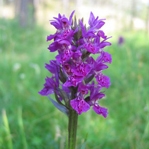
-
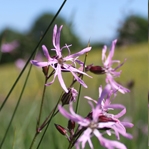
-

Curlew
Best time to see: All year
Curlew are very large, tall waders, about the same size as a female pheasant. The sound of the curlew's display call ('Cur-lee') is unmistakeable and can be heard from February through to July on its breeding grounds. Image (c) Damian Waters (www.drumimages.co.uk)
-
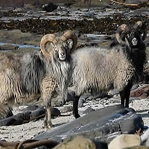
North Ronaldsay sheep
Small and short-tailed, like other primitive sheep, this distinctive breed also shows a variety of colours and horn formations. However, their most unique feature is their diet, which consists mainly of seaweed.
Image by North Ronaldsay Bird Observatory
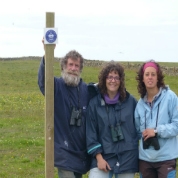
Dr Woodbridge and volunteers with the plaque on display, on their way back from a tern ringing expedition
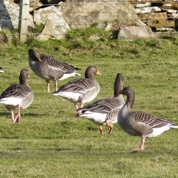
Greylag geese
Oystercatcher
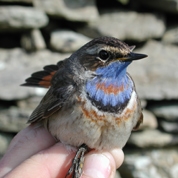
Spring Male Bluethroat
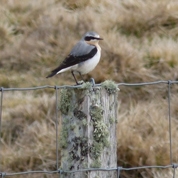
Wheatear