Rose End Meadows, Cromford
"242 different wild flowers have been recorded in these wonderful meadows"
- Julia Gow, Derbyshire Wildlife Trust
These meadows have never been treated with artificial fertiliser or herbicide. Each is different because of varying soil quality and depth but together they show how Derbyshire's limestone farmland would have looked around a hundred years ago. In spring and early summer, the meadows are a vivid mixture of yellow, white and blue, because of the wide variety of wildflowers - among them are buttercups, cowslips, cow parsley, bugle and wood anemone. Bluebells flourish in the larger meadow to the north east.
Midsummer is the main period for orchids - among the species found here are pyramidal, bee and common spotted orchids. They share the meadows with other wildflowers such as knapweed, betony and great burnet. This abundance of flora attracts large numbers of bees and butterflies. For birdwatchers there is plenty to see all year round, including greenfinch, mistle thrush, chaffinch, goldfinch and nuthatch, but the main attraction is the winter visits of the hawfinch. The two dewponds were traditionally used for cattle but are now fenced and provide an important refuge for the great crested newt.
There is evidence of past lead mining but this ceased about a century ago. The section which is cut for hay was probably flattened in the past as the adjoining land is still covered in lead workings.
Header image (above) © Roy Smith
Recipient Meadows
Species to spot
-
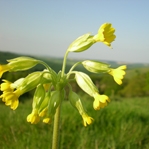
Cowslip
Best time to see: April - May
Easy to spot with its yellow cup-shaped flowers nodding at the end of tall stems. The name cowslip allegedly derives from ‘cowslup' - an old term for cowpat - since where the cow 'slupped' this flower was often found.
-

Bee orchid
Best time to see: June - July
One of nature's mimics: this orchid looks like a bee visiting a flower, attracting other bees as they try to mate with it. Despite this clever strategy, in Britain the bee orchid is largely self-pollinating. Image © Plantlife/Tim Wilkins
-

Great burnet
Best time to see: April - Aug.
The bulbous, blood-red heads of this member of the rose family often indicate a floodplain meadow. The name burnet comes from the Old French for 'dark brown' - the same source as 'brunette'.
-

Betony
Best time to see: June - Sept.
Long-living and slow-growing, this vivid magenta wild flower was used in the past as to protect against sorcery and - according to the Anglo Saxon Herbal - 'frightful nocturnal goblins'. Image © Plantlife/Andrew Gagg.
-
Your pictures

Image by Roy Smith

Image by Roy Smith